12 Psychological Stages of the Market
Investing in financial markets is not just a numbers game, it’s an emotional journey. Investors often experience a cycle of feelings that follow the market’s ups and downs. Understanding these psychological stages can help you better navigate volatility and make more informed decisions.
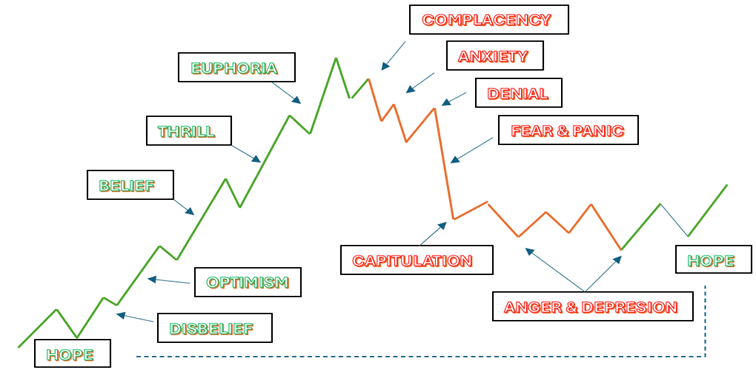
- Hope: As prices begin to climb, investors gain faith that the market is recovering, making it seem like an opportune moment to invest.
- Disbelief: Early in the accumulation phase, skepticism prevails as investors question whether the market has truly bottomed out and if prices will continue to rise.
- Optimism: During the uptrend, market confidence grows. Investors feel optimistic about the future, prompting them to purchase more assets.
- Belief: A wave of confidence sweeps over the market. With ongoing positive signals, investors become more assertive with their investments, often increasing their market exposure.
- Thrill: As the market continues its upward trajectory, investors experience heightened excitement, firmly believing that prices will keep rising.
- Euphoria: At the peak of the bull market, extreme confidence sets in. There is a strong belief in perpetual growth, which can sometimes lead to reckless investment decisions.
- Complacency: The initial declines are often brushed off as ‘minor corrections’, with a prevalent belief that the market will bounce back soon.
- Anxiety: As the market’s momentum slows, investors start to feel anxious and concerned that the market may have peaked.
- Denial: During the distribution phase, some investors refuse to believe that the market is heading down, expecting prices to rise again shortly.
- Fear & Panic: In the downtrend phase, fear takes over, prompting investors to sell off assets to avoid further losses. As prices continue to drop, desperation sets in, and panic selling occurs, with investors believing the market won’t recover.
- Capitulation: At the market’s low point, many investors give in and sell their assets at depressed prices, accepting their losses.
- Anger & Depression: Following capitulation, investors feel angry and depressed, regretting the losses incurred during the market decline.
 Market Mindset LATAM